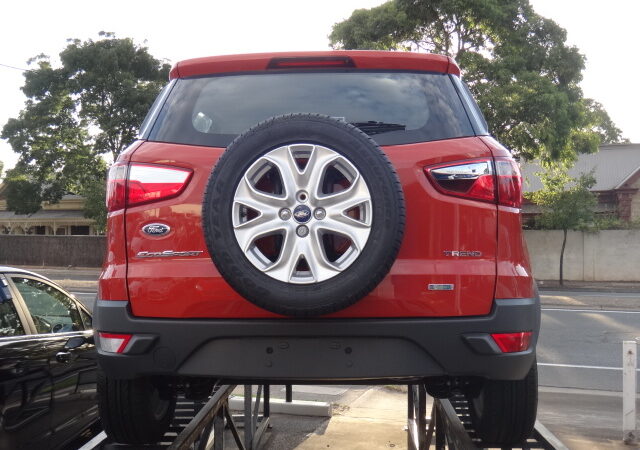
A staff member of mine once bought a “great deal” on a hatchback from a private seller, only to find out three months later it still had finance owing on it from the previous owner. She lost the car and the money, because she skipped a check that costs about as much as a coffee.
Quick answer: Before buying any used car in Australia, run a PPSR check (confirms no finance owing, theft, or write-off history), verify the roadworthy certificate matches your state’s requirements, and get an independent mechanical inspection. Do these in that order, each one protects you from a different kind of risk.
Step 1: PPSR Check (Do This Before You Get Emotionally Attached)
The Personal Property Securities Register is the official national check for whether a car has money owing on it, or has been reported stolen or written off. It costs around $2 directly through the official PPSR government website, and takes minutes.
This matters more than people expect: if a car has undisclosed finance owing, the lender can legally repossess it from you, even after you’ve paid the seller in full. You have essentially no recourse in that situation. A PPSR check is the cheapest insurance you’ll ever buy.
Step 2: The Roadworthy Certificate (Name and Rules Vary by State)
Every state calls this something different, and the rules differ too:
- Victoria: Roadworthy Certificate (RWC), must be less than 30 days old at transfer
- NSW: Pink Slip (E-Safety Check) for annual renewal, Blue Slip for more significant inspections
- Queensland: Safety Certificate, required from the seller for private sales
- Western Australia: Vehicle Examination Report, not always required for private sales if registration is current
- South Australia: Inspection Certificate, plus a separate Registration Check similar to PPSR
- Tasmania, NT: No mandatory roadworthy for most private sales, registration renewal is the main safety mechanism
A roadworthy certificate only confirms minimum safety standards at the time of inspection, not the car’s overall mechanical condition. Don’t mistake it for a full health check.
Step 3: Independent Mechanical Inspection
This is the step people skip most often to save money, and it’s usually the wrong place to cut costs. A roadworthy certificate and a proper pre-purchase inspection serve different purposes, a car can pass a roadworthy and still have expensive problems brewing. An independent mechanic (not affiliated with the seller or dealer) checking the car before you commit typically costs $150-300 and can save you thousands.
Dealer vs Private Seller: Your Legal Protections Are Completely Different
The three checks above matter no matter who you’re buying from, but what happens if something goes wrong afterwards depends heavily on whether you bought from a licensed dealer or a private seller. Buying privately, you’re relying almost entirely on the checks you did upfront, there’s no statutory warranty and the “as is” principle applies. Buying from a licensed motor dealer is different: for vehicles under 10 years old with less than 160,000km, most states require the dealer to provide a statutory warranty (commonly 3 months or 5,000km, whichever comes first) covering major mechanical faults, on top of the consumer guarantees you already have under the Australian Consumer Law. In NSW, dealer sales also come with a cooling-off period until 5pm the next business day, which the dealer can only remove if you sign a specific waiver form. None of this applies to private sales, so if you’re choosing between a slightly cheaper private car and a dealer one, factor in that the dealer price includes a real legal safety net.
Source: Consumer Affairs Victoria – Warranties on used cars.
Match the VIN Everywhere
Before handing over money, check that the Vehicle Identification Number (VIN) on the PPSR certificate, the roadworthy certificate, and the physical VIN plate on the car all match exactly. A mismatch is a serious red flag, not a paperwork typo to wave off.
Paperwork Checklist Before You Pay
- PPSR certificate (checked on the day of purchase, not weeks earlier)
- Current roadworthy/safety certificate for your state
- Seller’s photo ID matching the registration papers
- Written receipt with seller name, address, sale price, VIN, and date
- Service history and logbooks, if available
Buying Interstate? Check Twice
If you’re buying a car registered in a different state to where you’ll register it, most states require a fresh local inspection before transfer, an interstate roadworthy certificate usually doesn’t automatically transfer. Factor this cost into your budget before agreeing on a price.
Heading the other way and selling up before you fly out instead? Most of the same checks apply in reverse — see what to know before selling a car in Australia.
Final Thoughts
None of these checks are complicated or expensive individually, a PPSR search is a couple of dollars, a mechanical inspection a few hundred. What actually causes people financial pain is skipping one of them under time pressure, particularly the PPSR check, since that’s the one that can cost you the entire car. If you’re new to driving in Australia, pair this with our guide on P-plates and licence requirements before you start shopping.
—
*This article is for general informational purposes only and does not constitute legal or financial advice. Vehicle inspection and registration requirements vary by state and change periodically, always confirm current rules with your state’s transport authority.*
Once you’ve bought the car, insurance is the next step. See our guide to car insurance and driving in Australia as a new resident for what’s required before you’re legally covered.