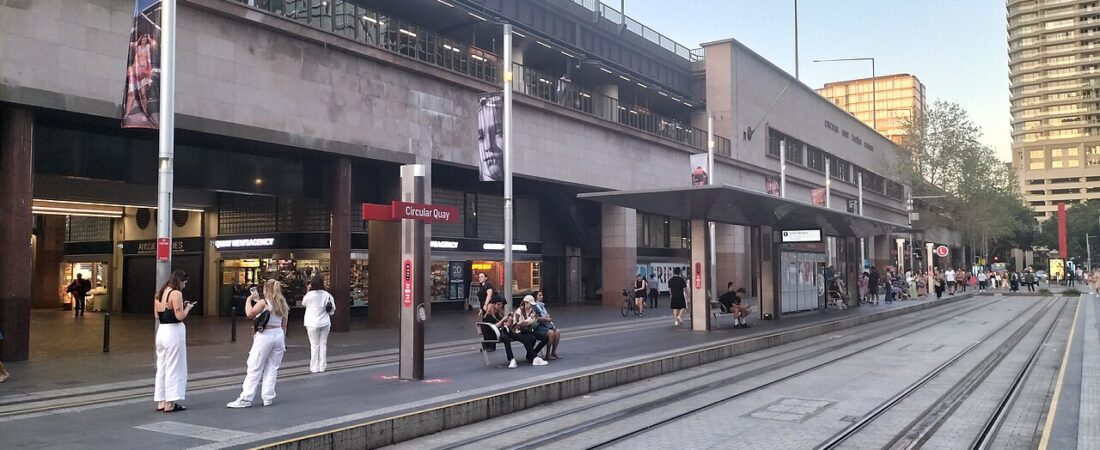
Every visitor I’ve ever hosted has made the same mistake at least once, tapping on with the wrong card, or worse, forgetting to tap off and getting charged the maximum fare. Each city runs its own system and they don’t talk to each other.
Quick answer: Sydney uses Opal, Melbourne uses Myki, and Brisbane/Queensland uses Go Card. All three work the same basic way (tap on, tap off, pay-as-you-go), but they are completely separate systems, a card from one city does not work in another.
Sydney: Opal
Opal covers trains, buses, ferries, and light rail across Sydney and much of NSW. You can use a physical Opal card (available free from station machines and newsagents) or tap on directly with a contactless bank card or phone, which works the same way without needing a separate card at all.
- Top up at station machines, online, or via the Opal app
- Fares are capped daily and weekly, so heavy travel days automatically get cheaper
- Always tap on and tap off, missing the tap-off on a bus or ferry can result in being charged the maximum fare for that trip
Melbourne: Myki
Myki covers trains, trams, and buses across Melbourne and regional Victoria. Unlike Opal, contactless bank card payment is more limited on Myki, a physical Myki card is still the most reliable option for visitors.
- Buy a Myki card from station machines, 7-Eleven stores, or newsagents (small purchase fee applies)
- Top up at machines, online, or via the Myki app
- Trams in the free tram zone (central Melbourne CBD) don’t require tapping on at all, useful to know so you don’t pay unnecessarily
Brisbane and Queensland: Go Card
Go Card covers trains, buses, and ferries across Brisbane and South East Queensland (including the Gold Coast).
- Available from station machines, newsagents, and 7-Eleven stores
- A small refundable deposit applies when you first buy the card
- Off-peak fares are noticeably cheaper than peak times, worth timing non-essential trips around this if you can
Other Cities
- Perth: SmartRider card covers trains and buses across Perth
- Adelaide: Metrocard covers trains, trams, and buses
- Canberra: MyWay card covers the light rail and bus network
Concession Fares
Full-time students and some visa holders may be eligible for concession fares, but eligibility rules differ by state and generally require an Australian-issued student ID or concession card, an overseas student card usually isn’t accepted on its own. Check your specific state’s transport authority website for what’s required.
A Few Tips That Apply Everywhere
- Always tap off, even if you’re not sure you need to, forgetting costs you the maximum possible fare
- Load more credit than you think you need if you’re new to a city, running out mid-trip is a hassle
- If you’re only visiting briefly, check whether contactless bank card payment is supported before buying a physical card you’ll only use once
What Happens If You Don’t Tap On
Skipping the tap-on isn’t a minor technicality, it’s an enforceable offence with a real fine attached, and NSW, Victoria, and Queensland all use plain-clothes and uniformed Authorised Officers doing random ticket checks, not just station barriers. In Victoria, failing to produce a valid ticket carries a $314 fine under the current penalty schedule. In NSW, travelling without a valid Opal fare or without your concession card on hand is a fineable offence under transport regulations, and first-time cases can sometimes be reviewed for leniency if the reader was faulty or you have a clean payment history, forgetting or being in a rush generally isn’t accepted as an excuse. If you’re new to a city and unsure whether your card worked, it’s worth checking your app or account rather than assuming you’re covered.
Source: Victorian Government – Paying a public transport fine.
Where to Check Official Details
- Sydney: Transport for NSW (Opal)
- Melbourne: Public Transport Victoria (Myki)
- Brisbane/QLD: Translink (Go Card)
Working out your overall budget? See what a working holiday in Australia actually costs week to week, transport included.
Fare Comparison by City
| City | System | Typical single fare |
|---|---|---|
| Sydney | Opal | ~$3-5 (capped daily/weekly) |
| Melbourne | Myki | ~$5 (capped daily) |
| Brisbane/QLD | Translink (go card) | ~$3-4 (capped daily/weekly) |
| Perth | SmartRider | ~$2-4 (zone-based) |
Frequently Asked Questions
Do these cards work across different cities?
No — each state runs its own system (Opal, Myki, go card, SmartRider), so you’ll need a separate card or app for each city you visit.
Is there a daily or weekly fare cap?
Yes, all four major systems cap your daily spend once you’ve tapped enough trips, so heavy users don’t keep paying per trip indefinitely. Exact caps vary by system and change periodically — check the relevant transport authority for current figures.
Can I use my phone instead of a physical card?
In most cities, yes — contactless bank cards and mobile wallets are increasingly accepted directly, though a dedicated transport card/app is often still cheaper for frequent travel. See our Cost of Living guide for how transport fits into an overall budget.
Final Thoughts
None of these systems are complicated once you’ve used them once, the confusion is almost always about not knowing a city has its own separate card before you arrive. If you’re travelling between cities, budget a few minutes at the station to sort out the local card rather than assuming your Opal card will somehow work in Melbourne.
If you do end up driving instead, keep in mind Australia’s toll road system works differently to public transport ticketing. Our guide to how to actually pay tolls in Australia explains how it works.